
Aeropostale: Teen Clothing
SPARC Group LLCShopping
4.8112.00 Reviews
- Version
- 2025.AW-0.0.7
- Installs
- 100.00K
- Age Rating
- Everyone
Screenshots




Our Review of Aeropostale: Teen Clothing
 Analysis by Appyee
I found Aeropostale: Teen Clothing most useful as a focused way to browse the brand’s casual fashion from a phone rather than as a full shopping companion for every kind of clothing search. The app is free, aimed at Everyone, and comes from SPARC Group LLC. In everyday use, its main appeal is simple: I can open it when I want Aeropostale items, look through the available styles, and move from inspiration to a possible purchase without sorting through unrelated retailers.
That narrow focus is also the key to understanding it. If you already like Aeropostale’s relaxed, youthful look, the app gives you a more direct path than a general marketplace. If you want to compare many brands, build a complete wardrobe across different stores, or use a highly specialized fashion-planning tool, a broader shopping app may suit you better. My experience is that this works best when I treat it as a brand-specific browsing and buying tool, not as a replacement for every other shopping method.
How I use the app for a normal shopping trip
My baseline workflow starts with a clear reason for opening it. I might be looking for casual tops, a comfortable outfit for school or a weekend, or a gift for someone whose style already matches the brand. That intention matters because the app is easier to appreciate when I am not expecting it to act like a general fashion search engine.
I begin by scanning the available clothing and noting which pieces fit the occasion. Instead of immediately choosing the first item that catches my eye, I compare the overall feel of several options: color, cut, layering potential, and whether the item can work with clothes already in my closet. This is a small habit, but it prevents the common mistake of buying a single attractive piece that does not fit into an existing outfit.
For a realistic everyday example, imagine that I need something casual for a school week and want to avoid making several separate shopping trips. I would use the app to browse a few tops and bottoms, keep a mental shortlist, and check whether the choices can be combined. A neutral top may be more useful than a louder design if I already own colorful jeans or jackets. The app helps with discovery, but the final decision still benefits from thinking about the rest of the wardrobe.
I also recommend slowing down before confirming an order. A mobile storefront makes browsing feel quick, and that can encourage impulse purchases. I look again at the selected size, color, quantity, and any displayed order details. This second pass is especially worthwhile when shopping from a small screen, where a tap on a neighboring option can be easy to miss.
The app’s free entry point makes it easy to keep installed for occasional browsing. I do not need to pay simply to access it, which lowers the commitment for someone who shops the brand only from time to time. That said, free access does not remove the need to think about the total purchase, delivery expectations, or whether an item is genuinely useful. The app can make shopping more convenient, but it cannot make a poor clothing choice become a good one.
What to check before you rely on a listing
My most useful habit is to treat every product screen as a decision page rather than just an image gallery. I look for the information needed to judge fit and practicality, then compare it with what I already know about my preferred clothing sizes. A familiar brand does not guarantee that every cut will feel the same, particularly when moving between fitted, relaxed, and oversized styles.
I also pay attention to whether I am shopping for a single item or building a complete look. A product that seems inexpensive or appealing on its own may be less valuable if it requires several extra pieces to become wearable. Conversely, a basic item may deserve more attention because it can be used across many outfits. This is where the app is more effective as a visual planning tool than as a place to chase the most eye-catching option.
When I shop for another person, I use a different process. I first consider their usual colors and silhouette preferences, then check whether the item feels like something they would actually wear. Casual teen clothing can be personal: a design that looks fun on the screen may not match the recipient’s everyday style. The app is helpful for collecting ideas, but I would not rely on it alone to guess someone’s size or taste.
Another practical point is timing. I prefer to browse when I am not distracted, especially if I am comparing multiple items. Shopping while commuting or rushing between tasks can lead to missed details and accidental selections. A few quiet minutes produces a better result than repeatedly reopening the app to correct a rushed choice.
Settings and phone habits worth checking
There is no reason to overcomplicate the setup. I check the app’s available phone permissions and notification controls through the device settings, keeping only what feels useful for my shopping routine. If alerts become distracting, reducing them is sensible; a clothing app should support my schedule rather than constantly interrupt it.
I also make sure the phone is running a compatible system. The listed minimum is Android 8.0, so users on older devices should check their operating system before expecting a smooth installation. On a supported phone, I still keep enough storage available and close unnecessary background apps if browsing feels sluggish. Those are ordinary maintenance steps, but they can make image-heavy shopping pages feel less frustrating.
Because the current version is 2025.AW-0.0.7, I would keep automatic app updates enabled when possible. Updating is not a guarantee that every experience will be perfect, but it is a sensible way to receive the developer’s latest fixes and adjustments. I avoid judging the app from a single session immediately after an update; I reopen it, repeat a normal search, and see whether the workflow remains comfortable.
My notification rule is simple: I want useful reminders, not noise. If the app offers alerts that help me follow an order or notice relevant shopping activity, they may be worthwhile. If they mainly pull me back into browsing when I am not planning to buy, I would limit them. This is a small distinction, but it helps keep the app from turning casual interest into unnecessary spending.
I also check my phone’s text size and display settings. Product shopping depends heavily on reading small details, and a comfortable display is more valuable than squeezing extra items onto the screen. Increasing text size or using a brighter, clearer display can make it easier to review options before purchase, particularly for users who shop on compact phones.
Faster patterns for repeat shoppers
Experienced users can make the app feel quicker without pretending it has shortcuts that are not documented. My preferred pattern is to define the shopping mission before opening it: “I need a casual top,” “I am checking gift ideas,” or “I want to see what fits my existing jeans.” That single sentence keeps me from endlessly scrolling through the catalog.
I use a three-pass method. The first pass is broad and fast, removing items that clearly do not suit the occasion. The second pass compares the remaining pieces by color, cut, and likely versatility. The final pass checks the practical details and selected options. This is faster than examining every listing with equal attention, and it reduces decision fatigue.
Another good habit is to shop around a wardrobe gap rather than around a mood. If I notice that I lack an easy layer for cooler evenings, I search with that purpose in mind. If I already have enough similar graphic tops, I skip them even if they look appealing. The app becomes more valuable when it helps solve a real clothing problem instead of encouraging duplication.
I find it useful to take a quick screenshot of a promising outfit combination for personal reference, provided I am only using it for my own planning. That lets me compare the idea with clothes I already own before placing an order. It is particularly helpful when I am shopping away from my closet or trying to remember whether a color will work with an existing jacket.
For repeat purchases, I keep a note of what worked: the general fit, the fabric feel after use, and whether the item held up in my normal routine. The app itself should not be expected to remember my personal preferences unless it explicitly provides that function. My own short wardrobe note can be more reliable than trusting memory several months later.
One trade-off is that a brand-focused app can save browsing time while limiting comparison. I may reach the right Aeropostale item quickly, but I am not automatically seeing equivalent pieces from competing brands. If price, material, or fit comparison across retailers is my main goal, I would open a general shopping platform as well. The faster workflow is valuable only when the brand is already part of my shortlist.
Where the focused approach reaches its limits
The biggest limitation is scope. This is a shopping app for Aeropostale rather than a universal fashion marketplace, so its usefulness depends on wanting this particular brand. Someone building a formal work wardrobe, searching for technical outdoor clothing, or comparing many labels will probably need another app alongside it.
I would also avoid assuming that a polished mobile presentation answers every fit question. Clothing is personal, and photos cannot fully replace knowing how a garment feels, hangs, or moves. When the fit is uncertain, I take extra time with the available item information and consider whether the purchase is worth the possibility of needing a different solution. For important occasions, visiting a physical store or choosing a retailer with a familiar fitting process may be the safer option.
Another limitation is the temptation to confuse convenience with certainty. A smooth browse can make an item feel like an obvious choice, but it does not tell me whether I will wear it often. I ask myself whether I can name at least two or three outfits that use the piece. If I cannot, the app has probably shown me an impulse purchase rather than a useful addition.
Users who need advanced wardrobe management may also find the experience too narrow. I would not choose it as my main tool for cataloging clothes, planning a capsule wardrobe, tracking outfits, or coordinating purchases across several brands. Those tasks are better handled by dedicated wardrobe apps or a simple personal spreadsheet. Aeropostale’s strength is direct access to its own shopping environment, not extensive clothing administration.
Privacy and device comfort deserve ordinary attention too. I review permissions, keep the app updated, and avoid shopping over an unreliable connection when I am close to completing an order. If the app behaves unexpectedly, I restart it and repeat the basic workflow before assuming the problem is permanent. For a purchase, I prefer a stable session over trying to rush through on a poor connection.
Who will enjoy it most
I would recommend it to shoppers who already recognize Aeropostale’s casual teen-oriented style and want a convenient way to browse from Android. It is also a practical choice for parents and gift buyers who know the recipient’s preferences and want to explore the brand without visiting several unrelated shopping sites.
The app is approachable for occasional users because it is free and carries an Everyone content rating. Its audience is not limited to teenagers; adults shopping for younger family members can use the same straightforward process. The important requirement is having a clear reason to shop the brand, since the focused catalog is an advantage only when it matches the user’s needs.
On the other hand, I would suggest skipping it as a primary shopping tool if I wanted broad cross-brand discovery, detailed wardrobe organization, or a highly specialized fit comparison. A general retailer may be better for assembling an outfit from different labels, while a physical store may be better when I need to judge fabric and fit immediately.
The public response is encouraging: the app holds an average rating of 4.8 from around 1.9 thousand ratings, with over 100 thousand installs. Those figures suggest that many users find the basic experience worthwhile, although they should not replace my own judgment about whether the brand and shopping style fit me.
My verdict after settling into a repeatable routine
After using it with a deliberate workflow, I see Aeropostale: Teen Clothing as a useful brand storefront rather than an all-purpose fashion assistant. Its best quality is focus. I can browse Aeropostale clothing without the distraction of a huge multi-brand marketplace, and that makes sense when I already know the look I want.
The app is currently at version 2025.AW-0.0.7, and its Android requirement begins at 8.0. I would keep it updated, control notifications, and use the three-pass browsing method to avoid wasting time. Those habits do more for the experience than endlessly scrolling or treating every attractive image as a must-buy.
My final recommendation is straightforward: install it if Aeropostale is already one of your preferred places for casual teen clothing and you want a direct mobile shopping route. Use it alongside a broader retailer when comparison matters, and choose an in-person option when fit or fabric is the deciding factor. It is strongest when used with a clear shopping goal, not as a substitute for thoughtful wardrobe decisions.
Verdict
Strengths of Aeropostale: Teen Clothing
- Frequent promotions make popular styles more affordable.
- The catalog is easy to browse by size, category, and collection.
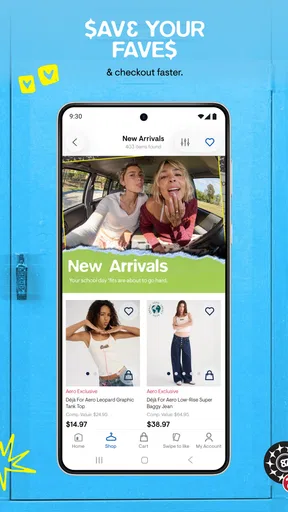
- Product photos provide multiple views of most clothing items.
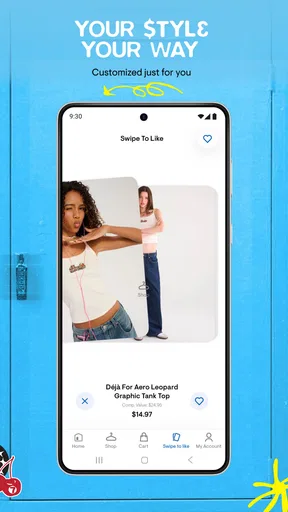
- Saved items help compare styles before making a purchase.
- Order tracking keeps delivery updates accessible in the app.
Limitations of Aeropostale: Teen Clothing
- Some sizes and colors sell out quickly, especially during promotions.
- Fit can vary between product lines, so checking measurements is important.
- Shipping costs may reduce the value of smaller orders.
- The app may promote frequent notifications and marketing messages.
- Returns can require extra time when items were bought during sales.
Similar Picks in This Category
View All
SHEIN-Shopping Online
Roadget Business PTE. LTD.4.8

Amazon Shopping
Amazon Mobile LLC4.4


Mercado Libre: Compras online
Mercado Libre4.8

Wish: Shop and Save
Wish US Holdings LLC4.7

Alibaba.com - B2B marketplace
Alibaba Mobile4.4
Frequently Asked Questions
What is Aeropostale: Teen Clothing, and what can I shop for in the app?
Aeropostale: Teen Clothing is the mobile shopping experience for browsing and purchasing the brand’s casual fashion collections. After exploring the app, users can typically find graphic tees, jeans, hoodies, dresses, accessories, underwear, and seasonal items for teens and young adults. Product pages generally include photos, available sizes, colors, prices, and descriptions, making it easier to compare styles before ordering.
Is the Aeropostale app free to download and use?
Yes, the Aeropostale shopping app is generally free to download and use on compatible Android or iOS devices. You do not normally pay a separate fee to browse products, create an account, or add items to your cart. However, purchases, delivery charges, taxes, and any optional services are billed separately. Availability and app features may vary depending on your country and device.
Do I need an account to place an order through Aeropostale: Teen Clothing?
An account is usually helpful but may not always be required to shop. Registered users can save shipping details, review previous orders, manage wish lists, and receive personalized promotions more conveniently. Depending on the checkout options available in your region, you may also be able to continue as a guest. Before submitting an order, carefully check your address, size selections, and payment information.
Does the app offer sales, coupons, or rewards for Aeropostale shoppers?
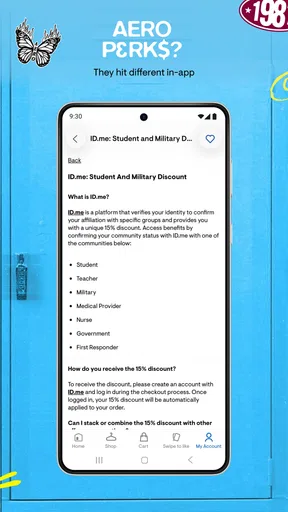
The app may feature promotional pricing, limited-time sales, clearance items, email offers, and brand loyalty benefits when those programs are available in your market. Some discounts require a code, account registration, or minimum purchase, while others apply automatically at checkout. Since promotions can change frequently and may have exclusions, it is important to read the terms before assuming that a coupon applies to every product.
How do shipping, returns, and size selection work when ordering from the app?
Shipping methods, delivery times, return windows, and fees depend on your location, the retailer’s current policies, and the items included in your order. Before purchasing, review the size chart because measurements can differ between garments and styles. If an item does not fit or meet your expectations, use the order details and official return instructions to confirm eligibility, packaging requirements, and whether return shipping or final-sale restrictions apply.
